
When do businesses get paid for sales, and what causes the wait?


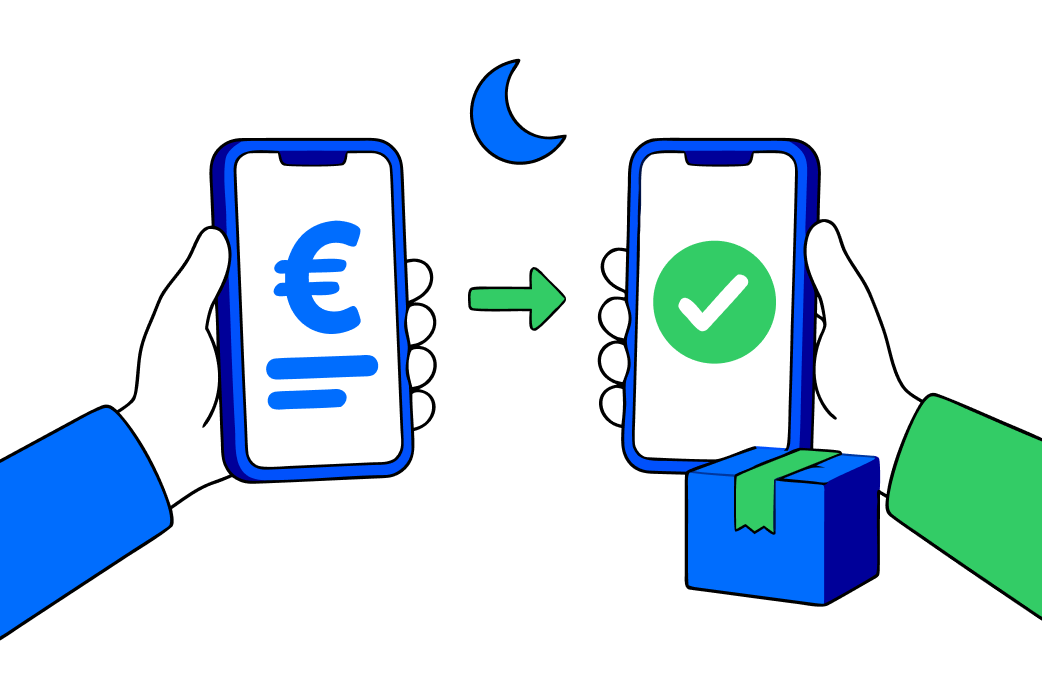
On a Friday evening, orders keep coming into an e-shop. On Monday, a supplier needs to be paid. But if the payment provider makes payouts within 3 business days, the money for those orders may not be in the account by then.
When a business gets paid depends mostly on the payment method the customer chooses and on whether the money is credited straight to your account or first goes to a payment intermediary. In the second case, the wait depends on the intermediary's payout schedule. Some payment service providers make payouts within 3 business days. If a payment is credited directly to the account you pay from, you can send the money to a supplier by SEPA Instant within a minute, even at the weekend, as long as the supplier's bank is a member of the SEPA Instant system.
This article explains why every day of waiting matters for cash flow, where the days are lost between the customer's payment and your account, and how to start using your sales revenue sooner.
Why does every day of waiting matter for cash flow?
In Intrum's European Payment Report, published in April 2026, most of the businesses surveyed say that late incoming payments leave them unable to pay their own suppliers on time. According to the European Commission's EU Payment Observatory, late payments cause one in four bankruptcies in the European Union, with small and medium-sized businesses particularly affected.
Salaries, taxes, and supplier invoices have to be paid by set deadlines. When planning these payments, it helps to separate two kinds of waiting:
- Until the client pays the invoice. This wait applies when you sell on deferred payment terms, for example to other businesses, and depends on the agreed payment deadline.
- Until the payment reaches your account. This wait depends on how you collect payments and is shorter when the money is credited directly to your account.
Three stages from the customer's payment to paying your supplier
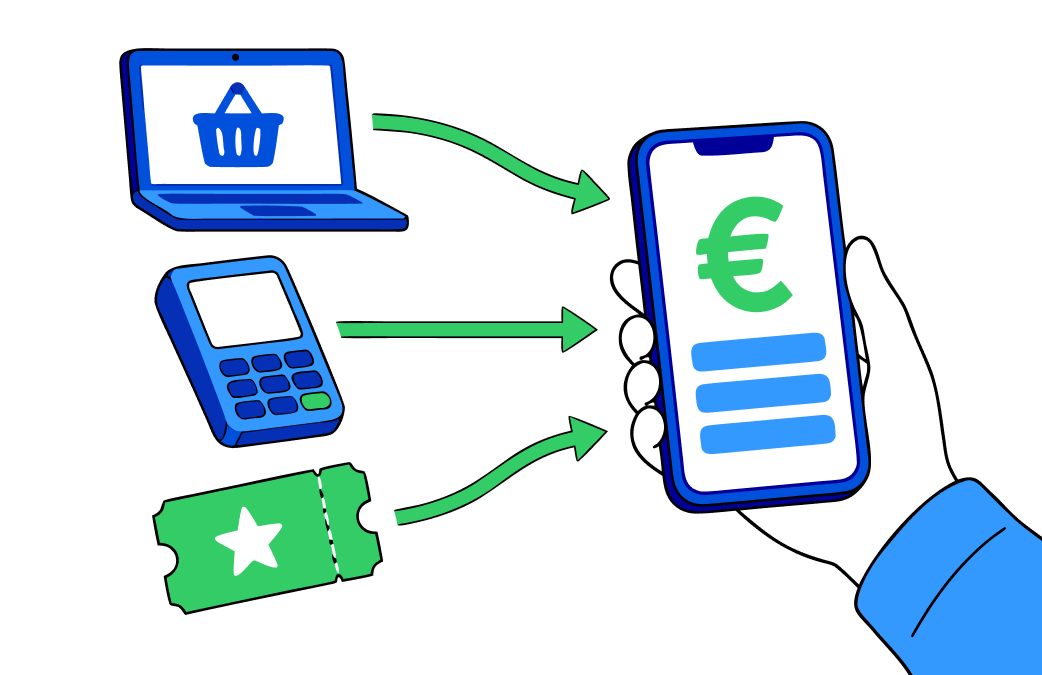
- Collection. The customer pays in an e-shop, at a till, through a ticketing platform, or at a self-service terminal.
- Crediting. The money goes to a payment intermediary's account or straight to yours.
- Use. You pay a supplier, pay salaries, or exchange currency.
Where are the days lost?
- Payout schedule. Some payment intermediaries hold the funds they collect in their own account and make payouts to the merchant on a schedule: every business day, every week, or once a month. Some international providers in Europe usually pay out within 3 business days.
- Weekends and holidays. Some providers do not make payouts at weekends or on public holidays, so a payout due on one of those days reaches the account on the next business day.
- First payout. In many European countries, some providers make the first payout to new merchants only after 7 business days.
- Transfer to a bank account. Some intermediaries keep the collected funds in their own system. The money is transferred to your bank account on a set schedule or only when you request a payout yourself.
If you are choosing a payment provider right now, check whether the money is credited to your account immediately and whether you can see the status of every payment in real-time. We cover more criteria in the article ‘What is a payment gateway and how to choose one?’.
When a customer makes a bank payment through the Paysera Checkout Modern payment gateway, the money is credited to your Paysera account immediately.
When does the money reach your account if you sell through several channels?
Lithuanian businesses are active online sellers. According to Eurostat data for 2025, Lithuania has the highest share in the EU of businesses with 10 or more employees that sell online. Many businesses also run a physical shop, sell event tickets, or accept payments at self-service terminals.
When every channel has its own provider, the money arrives at different times and in different accounts. To see how much money you actually have today, you need to add up the data from several provider accounts and statements.
When payments are collected through Paysera, this is how long it takes for the money to reach your account:
|
How you collect payments |
When the money is in your Paysera account |
|---|---|
|
E-shop, bank payment via Paysera Checkout Modern |
immediately |
|
Event tickets via Paysera Tickets |
immediately |
|
Physical shop with Paysera POS |
within 1 calendar day of payment confirmation |
Self-service terminals |
the next day |
All the money collected this way is credited to your Paysera account, so you do not have to gather it from several different providers.
Fewer providers, less work for your accountant
When money comes in through several providers, at the end of the month your accountant often has to match each provider's reports against orders and the account statement.
When sales revenue and payments are in the same account, your accountant finds income and expenses in one statement rather than in several providers' reports.
How can you use your sales revenue straight away?
Having money in your account does not make it easy to use if you pay suppliers and exchange currency from another account.
Once your sales revenue is in your Paysera business account, you can also make payments from it:
- To a supplier at another bank. SEPA Instant transfers are accepted for execution at any time of day, including weekends and public holidays, and reach the recipient's account within a minute, provided the recipient's bank is a member of the SEPA Instant system.
- To a supplier on a business day. A standard SEPA transfer submitted for execution before 4:45 PM (UTC+3) reaches the recipient the same business day. The exact crediting time depends on the recipient's bank.
- To another Paysera user. Transfers within SEPA countries are free and reach the recipient immediately.
- To a partner abroad. You can convert funds into 30 different currencies in real-time.
- For everyday expenses. The digital Visa card, available to companies registered in EEA countries, has a separate IBAN account. You top it up from your main account, so you can keep only as much on the card as you plan to spend. You can also order an additional business card for another person. The issue fee is listed on the payment card fees page, and there is no monthly fee for an additional card linked to the same account.
Practical tip: if a transfer to your supplier is not marked ‘Instant’, the supplier's bank does not support SEPA Instant. In that case, if the supplier needs the money before the weekend, submit the payment by 4:45 PM (UTC+3) on Friday. From a Paysera account it will be sent the same business day, and the crediting time depends on the supplier's bank.
What does this look like in practice?
E-shop. A customer pays for an order by bank payment on Wednesday at 9 PM, and the money is credited to the shop's account immediately. Standard SEPA transfers from a Paysera account are accepted for execution on business days from 8 AM to 8 PM (UTC+3), so the owner pays the supplier by SEPA Instant the same evening, and the money reaches them within a minute.
Café. Card payments received through POS on Saturday are credited within 1 calendar day, so the café can already use them on Sunday.
Concert organiser. The money for every ticket sold appears in the account immediately, so the organiser can pay event costs before it starts.
What should you know when planning payments?
A monthly account fee of EUR 5 applies to business clients. The first 30 SEPA transfers to other banks each month are free, then EUR 0.30 per transfer. Transfers to other Paysera users within SEPA countries are free. Different fees apply to international companies and payment service providers, as listed on the euro transfer fees page.
FAQ
When do businesses get paid for sales?
It depends on how you collect payments. Bank payments via Paysera Checkout Modern and money for tickets sold via Paysera Tickets appear in your Paysera account immediately, Paysera POS payments within 1 calendar day, and self-service terminal payments the next day. Money collected through payment intermediaries arrives according to their payout schedule.
How long do POS payments take to reach the account?
Under the Paysera POS service agreement, collected payments are credited to the Paysera account within 1 calendar day from the moment of payment confirmation.
Can I pay a supplier at the weekend?
Yes, by SEPA Instant, provided the supplier's bank is in an EEA country and is a member of the SEPA Instant system. Standard SEPA transfers from a Paysera account are only accepted for execution on business days.
Conclusion
You cannot always avoid waiting for a client to pay an invoice. You can shorten the wait for payments to reach your account: collect payments so that they are credited directly to your account, and pay suppliers from it.